17 December 2013

Wondering on the Eve

in utero wp editionby scissors-hands
Fifty-nine years ago Now 
I was curled inside my mother's womb on the brink of farewell to the only Home I'd ever known. Soon to breathe in a way I'd never known. I had no idea of the journey that awaited. I had no ideas. 
Or words.
I was warm and wet in the womb sojourn. No night no day no wondering.
I am wondering Now
was the womb the first sojourn. Where was I before that place?
I am wondering about the brink where I rest Now and the journey that awaits.
Perhaps I have no idea. Only words.
A conspiracy beyond me moved me into this unknown world.
And I'm wondering.

13 December 2013

Have You Heard the One....

I was a little worried yesterday:  There are too many Sojourner in the 21st Century (SITC) posts now to remember exactly what I've said in each. What if I repeat myself?

I abandoned the worry (and, if you know me at all, you know this was easily accomplished) by reducing the issue to its plainest, simplest terms:  I am afraid of writing/saying something I've written/said before. My assumption is that you desire and (require?) something "new" each time you visit my blog and my fear is that you will stop reading (e.g., stop loving me) if I fail to fulfill that desire.

The easiest way to avoid repeating myself is to stop blogging.  This is not a viable option since a) I want to keep blogging; and b) not blogging (i.e., disappearing from view) definitely puts the kibosh on receiving your love...

A more complicated, time-and-labor-intensive strategy would be to re-read SITC from the beginning, creating an index of topics, keywords, images, etc. as I go and then to consult said index before publishing any future posts.  

There's a good chance such an index will eventually be created since I am contemplating transforming the blog into a book; but it hasn't happened yet and, honestly, I am not willing to postpone additional blog posts until such an index is created. I'm just not....

But perhaps my assumption that you want something new every time you visit is incorrect.

Or it might be that even if I repeat myself, you won't stop loving me (or at least reading me). In which case the worry, as is often true, is unnecessary, a waste of psychic time and energy.

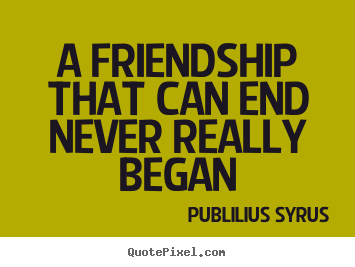
I'm pretty sure I've told you the story of my friendship with Laura. That friendship ended -- she chose to walk away -- when I said I doubted we would be forever friends or close friends because our value systems were so very different. I was speaking from what I knew and believed at that point in time. It sounds naive and ignorant to me today but it really was the way I looked at things then.

I thought about Laura yesterday after spending time with the one and only woman in Holly Springs who I call "friend". On the one hand, I am immensely grateful to have a friend in this town. We have some things in common -- including both being aspiring writers and both being transplants to MS from northern states.

On the other hand, we are very different from each other:  I am inclined to value my own counsel above all others -- sometimes recklessly so -- where she is more inclined to base her choices on social convention and diplomacy. In a controversy, I look first at the heart and soul of a person and she more often looks first at the impact and influence of race and politics on the situation.

As I drove away from her house yesterday, reflecting on some of the territory we covered conversationally, I caught myself thinking "I see limits. We will not be forever or close friends." I was almost immediately aware that I was about to make the same mistake I made with Laura 10 years ago.

Some of the movies and novels I love most hinge on pairings of dissimilar personalities, people who are, on the surface, very different from each other, perhaps irreconcilably so, who go on to become good and solid friends. I feel these stories deep in my soul and enjoy inserting myself into them. Such friendships are big, complex, rich and the participants become bigger and more complex people through them.  


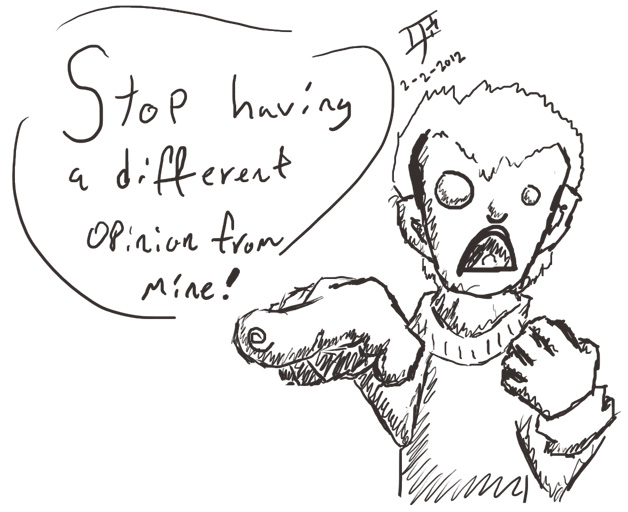
It's not an arrangement that I've seen very often in real life. Mostly I've seen (and experienced) "Oh, so you believe THAT. Well, I believe THIS which makes you wrong and I'm outta here." It happens a lot. Intolerance for difference. Inflexible commitment to a perception of "the right" in a given setting.

I recently shared Voltaire's notion that "Doubt is not a pleasant condition, but certainty is absurd" with an acquaintance, suggesting that the discomfort and unpleasantness of doubt or "not knowing" is so great that it drives some people to violent conflict or dissolution of relationship. She replied that people who can't see that some things in the realm of human endeavor have been researched and proven to be absolute certainties, should rightly be forsaken; they are impossible and relationship with them is impossible. (Yes, we were talking about religion and the Holy Bible was the archive of "absolute certainties" she offered.)

**********************
I'm certain now that I've talked about this before. Maybe some readers realized this early on and stopped reading....and will never return.

Maybe some readers disagree with me (and Voltaire) and the conflict between our perspectives is the final straw -- they stopped reading and will never return. 

There's something in all of this feels like a bottom line of human social interaction. Something that will either be understood and peace will reign or will not be understood and the fighting and breakups will continue. 

Oil and water don't mix but something happens when they come together...


07 December 2013

Winter Birds

The land has taken on the drab colors of winter -- grey and brown and white -- so it's impossible not to notice them when they're in the vicinity. Brilliant bursts of red against the ashen background of winter trees. And it's impossible not to feel some excitement at every noticing. The color startles. Something unabashed and unapologetic about such boldness of hue.

All the more exciting to see two or five or 20 of them, a crowding cloud of cardinals, in the wooded areas to the front and rear of the house for the last several days. "Bustling" is a way to describe their activity:  flying then perching, flying then perching, twittering feathers and swiveling heads while perched, then brief hunt-and-peck missions on the ground-- only a few seconds and purposefully before making quick winged sprints back to bush or fence post. Scarlet flight:  sound in motion. Do cardinals ever sing? They have been quiet the last few days as I stood on the porch smoking but that could be due to my presence. Maybe they sing when I'm away....

No two birds seem to belong together more than the male and female cardinal. They are "birds of a feather" though her pale coloring is a somber echo of his screeching scarlet. They are companions -- so alike in form. In the uncomplicated contrast of their coloring they seem to complete each other.

[Note:  Just went out for a cigarette break and to scatter the crumbs of the last loaf I baked around the yard and on the ground beneath the trees across the street. The cardinals and other winter birds gathered....and I heard the cardinals sing.]

I woke up early today, the pain and distress of missing my son too great to allow sleep. While the coffee pot gurgled, I stood at the front door and watched industrious squirrels harvest and bury the last of the pecans. Cardinals and wrens and chickadees and other birds whose names I don't know scrambled around the bread crumbs. Others in the winged community paced or perched or pecked about on the porch and in the yard, in the bushes and trees on both sides of the street. So much activity!

The cardinals' color expressed my feeling: the bright red a picture of the intensity of my psychic pain, the muted tones of the female a visual representation of the steadfast loneliness I feel.

I think of Sojourner Truth. My identification with her is embedded in every page of this blog. She, too, was a dark-skinned, outspoken woman whose presence and manner frequently provoked antipathy in others. She, too, was regularly counseled to sit down, back off, stop saying what she was saying, stop doing what she was doing. She, too, spent most of her adult life longing for "a room of her own."

And she, too, had a son she loved who was finally lost to her.

I am discovering that there is no escape, no salve, no comfort. All the reasoning and prayer and alcohol in the world is ineffectual, provides no relief. This mother's heart is bound intimately, inextricably and forever to her child. The longing for him is an experience of bearing the unbearable, as though each breath I take might be my last.

My mother and I were estranged for the last 20 years of her life. Poring through her photograph albums last week in FL, snapshots and newspaper clippings of me as a child and a teenager, items she collected before the permanent estrangement kicked in, I wondered:  did she ever look at these things again after she closed her heart to me?  If so, was it painful?

I pondered the contradiction of her refusal to see me or speak to me while preserving a baby book with a lock of my hair preserved in a wax-paper envelope. What did it mean? What does it mean?

A Facebook friend, a woman I've never met, lost her teenage son. He went missing and she later learned he was dead. Her heart aches. Her life aches. We, her virtual community, witness some of the surges of agony. I consider that her pain must be greater than mine -- my son is still alive and I know where he is. I cannot fathom how she stands it.

******************
The ground is frozen. Two days ago, the rain fell steadily for most of the day. That night the temperature began to fall while thunder and lightning enlivened the night. Yesterday temperatures plummeted and anything still wet from the downpour was gradually encased in ice. Today I gaze on a scene of devastating beauty: the gardenia, azalea and forsythia bushes are flattened or nearly so, their branches sheathed in ice. Vines and
grasses, twigs and leaves on the ground wear beards of hoarfrost. Icicles drape the branches of every tree, forming a bright crystal canopy overhead. The great pecan tree on the front lawn whines and groans as it bears the weight of winter.

I gather stray twigs from around the yard and toss them onto a heap of leaves raked to the curb weeks ago (where are those city maintenance teams?). The frozen sprigs make a crisp, crackling sound as they hit the icy pile. Moments later, winter birds flock to the mound, alert to some edible life beneath the surface. They peck and chirp and quarrel. They know something I don't know; they perceive sustenance that is invisible to me. 

I am scratching here, click-click-clicking the keys, clawing my way to break the frozen surface of my grief, to find the warm space of compost underneath, where the promise of Spring -- companion, shadow, echo to the bright red pain of Winter -- sleeps now as larvae and seed.




06 December 2013

Goodbye Nelson

When I heard (read on Facebook) the news that Nelson was dead, my first thought was "The King is dead." His was an undeniably gigantic life.

The weather here turned crazy last night:  rain, rain and more rain, cold, lightning and thunder. I couldn't sleep. Sat up until almost 5 a.m. reading about Mandela. This article from the New York Times, Nelson Mandela, South Africa's Liberator as Prisoner and President, Dies at 95, is comprehensive and full of things I didn't know about the man.

Born and raised as royalty. Given the name Rolihlahla -- which translates to "the trouble maker." The son of an African chief who was stripped of his authority by the British occupiers for "insubordination." There were strong clues from the very beginning that Rolihlahla's life would be large. I wondered as I read the bio, what does that kind of life feel like? It must surely include bouts with a bad cold and misplaced keys and all the rest of the mundane markers that define any life; but underpinned with royal beginnings and an unshakeable commitment to securing the freedom of your fellow citizens, maybe even bad colds are a different kind of experience.

He was a man. Married three times. I think about the wives. I think about the courtships and the first sexual explorations with each of those women. I wonder "What did he like? What turned him on? What kind of a lover was he?" Did his identities as royal progeny and "trouble maker" define his sexual appetites as significantly as they did his political and professional life?

The "shadow side" of Mandela's life:  the breakups with wives, the conflicts within the ANC and elsewhere in the political arena, the phase of violent militancy...documented but hardly seem to have mattered to the millions who revered him. Because they/we didn't know about the shadow or because they were insignificant when compared to the great accomplishments? Most of the shadow revealed in the NY Times obit was new for me. I always assume the imperfection of every human, great or small; and, short of meeting a celebrated human like Nelson Mandela face-to-face and hanging out with him for a season, I accept as fact that I do not know them. I cannot see them clearly; their greatness and shadow are offered to me through the distorted lens of reports by "the media." I don't for a moment take these reports to be "the truth."

As always, coordination of the funeral, memorials, tributes, etc. now become the focus of those who survive Mr. Mandela. From the top levels of government where issues of security, protocol, transportation and staging are paramount, to the crowded mid-tier where family and friends will wrestle with who gets what and who sits where -- we move now into Act Three (Act One being his journey into the limelight and Act Two the work and fruition of themes and missions introduced in Act One), which will be of only slightly less historical significance.

My preoccupation, as ever, is with the nitty-gritty realities of the players in Act Three:  President Zuma, Winnie, the clarinetists in the military band, the maintenance workers who will clean-up after the final post-death event. I want to hear the story of the 9-year-old daughter of the undertaker who finds a battered signed copy of Long Walk to Freedom on her father's desk a week after the Mandela funeral; or the maid who cleans Oprah Winfrey's hotel room the morning she returns to the U.S. Or the rest of the Nelson Mandela story that will never be written in history books.

05 December 2013

Back...and Forth

Ebb and Flow   Photographer:  Matt Tilghman
I read somewhere recently that scientists are still in search of answers to why we remember, the biological imperatives for memory, a complete organic and chemical mapping of the process of remembering. Under different circumstances and provided appropriate prompts, I might have joined their ranks and made the investigation my life's work. Memory has intrigued me for a very long time.

It is fascinating, for example, how a perfectly lovely day can be negatively impacted by the sight of a woman wearing a dress like one my 2nd grade teacher wore on the day of some classroom crisis, an event that slept unobserved in my mind for decades. Where is such a memory stored in the mind and why is it stored? Why don't we remember everything? Or do we, in fact, remember everything but only have access to particular memories?

"Ebb and Flow #8 (from the Ebb and Flow series). Drawing. Artist:  Doug Russell
Over Thanksgiving, in my sister G______'s Tallahassee home, my pulse and breathing commenced the rhythms of anguish as I noticed the photographs scattered throughout the house on walls and bookshelves:  various groupings of my mother and siblings and grandmother, shot in an array of locations and events. I do not appear in any of them. Looking at the photos, memories were evoked although the pictures depict times and spaces I  never visited, Memory and emotion swirled and swelled with enough force to affect my heart rate and bring tears to my eyes.

I stood alone before these images and felt the loneliness and yearning of a lifetime, while echoes of voices and music clamored and collided in my mind's ear.

Several large cardboard boxes sit in my sister's dining room. They contain photographs and other memorabilia from my mother and maternal grandmother's lives. By G____'s report, the boxes have been largely untouched since they were deposited in their place against the wall. The project to sort and distribute these sentimental artifacts has not advanced. "Oh, you go ahead and take care of it," has been the response of visiting family members.

A motivation for my Thanksgiving visit this year -- my first visit in almost 8 years -- was to assist in the sort-and-distribute project. With quickened pulse and trembling hands, I jumped in on Day Two. As I worked, it occurred to me:  perhaps in my position/role as "outsider" I have an fortitude that makes the task less painful than it is for the "insiders." Or, my pain is of a different kind.

There are few things I enjoy more than standing smack dab in the middle of a jumbled mess and being charged with creating order. As I worked, my fondness for organization would rule...and then be obliterated by a flood of heartache and memory....then rise again and fill me with pleasure and inspiration as the design of workable system emerged. What drives that fluctuating flow? Instantaneously, gripped by a wave of heartache, I lost the sharp focus and bright-burning creative energy that moments before had my fingers flying on the keyboard as I entered data into my spreadsheet. I felt heavy, my hands lay thick and lifeless in my lap. I stared at the photographs...into the eyes of people who love me but would rather not be around me.

In the present moment -- the here and now where I am real, where I have body and mind -- contemplating "back then" -- photographed worlds where I do not appear, existing only as a memory in the minds of the people who do appear, my vitality is sacrificed when painful remembering surges.

I want my vitality. How to not remember....  Or how to become stronger than Memory.

01 December 2013

The Surface of Things

Day Four of a visit at my sister's home in Tallahassee FL. There is truly "no place like home." The psychic characteristics of Family zones, are so distinct; there must be a setting on the holodeck.... The alteration to reality that I experience in the company of my family is unique and mysterious.

As a young adult, whenever I returned "home" for a visit, a violent headache would set in a few miles outside the city limits. The phenomenon was predictable as daybreak and I never traveled home without Excedrin (and, in later years, Aleve) in my backpack.  Growing up, I was "the child who has headaches," but once I left home the headaches stopped...except during journeys home.

After the Big Argument of 1998 during a "family reunion" in Lake Tahoe, I was persona non grata and did not visit parents or siblings for awhile. Short of telephone conversations once or twice a year with my sister G____, there was essentially no contact between me and my family.

When my mother died in 2012, after a prolonged illness that had been kept secret from me, I was formally disowned by my siblings.  After a couple weeks, G_____ emailed an apology for her emotional over-reaction and we have attempted reconciliation by telephone from then until now. The repair of the relationship rests solidly on not-talking about the wounds and not asking questions. The taboo topics are tacitly understood and, with a few accidents on my part, the peace has held in the silence.

The silence and masking have been stressful for me. I didn't realize how much until last night. We went together to see "The Book Thief" and I believe its exploration of themes like death and forgiveness, honesty and honor (to name a few) affected me, stirred the deep waters. I was quiet enough on the ride home for G____ to remark "Are you tired?" "Maybe a little," I answered. "Mostly just thinking about the movie." She thought the film was too long and had no plot.  I found it moving and profoundly relevant to our family -- but I did not say so.

Hans Memling, Virgin and Child with Saints Catherine of Alexandria and Barbara
(Detail), early 1480s; oil on wood.
I suffered last night:  headache, indigestion and despair. I felt untethered and flawed...and exhausted. This morning, I perceive my conflict with my family as a clash of cultures. I was born predisposed to inquire and analyze and plumb the depths, into a tribe committed to the preservation of smooth surfaces. Where they strive to maintain a beautiful, undisturbed lawn that matches the beautiful, undisturbed lawns of every other house on the street toward securing social harmony, I am inclined to turn the soil to see what lies beneath; to plant vegetables wherever there is sunlight--even in places deemed inappropriate by social convention; to delight in the surprise of things growing where they will, the emergence of weeds and worms and mysterious blooms.

My sister lives in a large, well-appointed house. This morning on TV, Oprah is interviewing "an expert" on spirituality.  Viktor Frankl's "Man's Search for Meaning" is mentioned and I make a note to re-read it. The set furnishings look very much like my sister's living room and the discussion in the interview sounds like the discourse in the books of my library. My sister is riveted to the screen, listening to strangers speak openly about things we do not discuss in my family. I am wondering what she makes of it...


20 November 2013

The Eroding Common Ground

Sam Harris' recent blog post, The High Cost of Tiny Lies, set me thinking. As you may have noticed, Honesty and Lying are big issues for me and sit near the top of my list of "most visited sites."  Harris says
We live in a culture where the corrosive effect of lying is generally overlooked, and where people remain confused about the difference between truly harmless deceptions...and seemingly tiny lies that damage trust.
and I agree. You may recall Adrienne Rich's eloquent essay "Women and Honor:  Some Notes on Lying," posted here in its entirety six years + one day ago (... perhaps my "thing" about lies and honesty has a cyclical momentum?) in which she says
To discover that one has been lied to in a personal relationship, ...leads one to feel a little crazy.
Leaving for now a precise defining of "personal relationship," consider this:

You and I spend five minutes together, during which time we enact the ritual rhetorical "How are you?/I'm fine and you?" (though, in fact, you are heartsick about your husband's gambling addiction and I am desperately lonely), you say "So good to see you. You look great!" (though, in fact, you are reading pain and distress in my face and posture) and I say "Thanks! We ought to get together more often..." (though, in fact, I have assiduously avoided contacting you, illogically fearing that your family's misfortunes might contaminate my life.)

I don't deny the possible individual comfort we may each derive merely from sharing space for a few minutes. My question is:  how is the spiritual solvency, the honor and integrity of our relationship served by this interaction? Do we know each other better? Is the friendship deepened? Have we added a brick to the foundation on which our "friendship" rests? We tenderly exchanged some pretty....little...lies. We could say no one was hurt in the exchange; and yet, I see this as an example of that "corrosive" effect Harris mentions. I walk away from such an interaction trusting people and myself a little less.

The webs we weave with our pretty little lies can be viewed as trap or protective cocoon or safety net. It's been argued that without pretty little lies, society would fall apart (whatever that means...). But the liar who seeks to conceal her vulnerability from the world, to be perceived as Strong and Happy and Normal, is trapped by her lies on the afternoon when a personal disaster (the legendary "rain" that must fall in every life) and she needs a shoulder to cry on. And what comfort or protection is a security blanket woven from the mendacious assertion that the U.S is "the greatest nation on Earth....everybody wants to be us" in the face of "their" protests, escalating in volume and violence, that "No You Aren't & No We Don't"?

*******************
The Harris piece was also noteworthy for taking on the Santa Claus question, something that came up annually for me when I was raising my son.

I never indulged the Santa Claus myth with him, i.e., gifts didn't come from Santa, they came from me and Nana and other people who loved him. Santa was like Little Bear and The Transformers and other entertaining imaginary entities vividly evoked in literature and popular culture. They exist -- just not in the corporeal realm (although you will run into real people in costume -- just part of the fun.)

I heard more than once that by choosing to be "honest" about Santa I was inflicting psychological wounds that would never heal. (Note: I admit the jury is still out on that one. There is an unmistakable "rage against ______" energy in evidence in my adult son. Maybe that's my fault?)

Rich says that while the liar may claim she is lying to protect her friend's feelings, she is actually thinking of herself. She is trying to control how she is perceived by her friend and others. But I was actually thinking of myself when I told my son the truth about Santa:  I just didn't feel up to the work of maintaining the deception. (My mother held it up as further proof of my "laziness" and there's some "truth" in that.)

All of which relates, for me, in some way to the follow-up correspondence and interactions between the founder of the Oxford writing group (discussed here recently in The Lonely Writer) and me. I've received two or three additional email messages from her and she also attended a presentation I gave a few weeks ago at a local UU church and approached me afterwards. In writing and in person, without making a forthright accusation, she has referenced a distinction she makes between "aggressive honesty" and "assertive honesty". As she sees it, the well-adjusted person seeks " to be assertive - expressing what I need or feel in a way that is honest yet not threatening to the hearer."

It's a lovely goal. For me, however, the challenge of taking responsibility for someone else's feelings, making sure they are never threatened by anything I say or do, is daunting. I'm up for the work of scrupulously monitoring my own intentions (admitting I fall short sometimes), keeping tabs on the motivations underlying my words and actions and apologizing when I inadvertently step on toes. To be honest...I don't believe my telepathic, intuitive and psychic abilities are adequate to the "higher math" assignment of calculating in advance how anyone -- close friends or casual acquaintances -- will interpret or respond to my words, actions, choice of attire, etc.

In an interesting twist, which I pray is the last scene in this saga that has grown tiresome to me, she sent an email reflecting on the last gathering of the writers and its aftermath. The correspondence included several misstatements/lies/discrepancies and I wrote a response, attempting to correct the errors.


Turns out I was inadvertently included in the Recipient list for that email. She responded, in part:
I did not mean to cc you on the earlier email, it was a mistake. I'm sorry to have disturbed you. I wish you all the best, Alex.
I would be happy to discuss the things that concerned me during your critique of my work, but I don't think this interests you.
May God Bless you with His Very Best,
Ironically, this woman's "niceness" and "assertive honesty" feel like pretty little lies to me. She wasn't "happy" about what she calls my "critique" (which consisted of asking her if "N-word" was written that way in the original piece she read or if "nigger" was spelled out in the essay and she used "N-word" to be polite around me, the only person of color in the circle) and I don't believe she'd be happy discussing that critique with me now, two months after the interaction in question. I do feel "a little crazy" every time we interact. I have reached a point of certainty that no matter how much compassion and empathy I might summon from the depths of tenderness in me, if I continued this discussion honestly, she would see it as an act of aggression. 

And so, no hard feelings (some exasperation but no animosity) I bid her an honest and less-than-fond farewell.
John William Godward (1861-1922)
A Fond Farewell


We live in a culture where the corrosive effect of lying is generally overlooked, and where people remain confused about the difference between truly harmless deceptions—such as the poetic license I took at the beginning of this article—and seemingly tiny lies that damage trust. - See more at: http://www.samharris.org/blog/item/the-high-cost-of-tiny-lies#sthash.dlImOONY.dpuf