05 June 2014

03 June 2014
The Golden Rush
Shortly after I reached Holly Springs, a kind and generous friend, recognizing the the sanity-shattering possibilities were I to attempt residence here without access to a personal vehicle, sold me her car. The agreement was that I would take immediate possession of the car and 12 months from that date payments in the amount of 10% of my monthly earnings would begin.
 Last night I made the final payment on the car.
Today, I deposited my earnings from last weekend's playshop in Panama City, FL into my checking account. The balance is a couple dollars over $2000. This is only the second time in my life that I've had $1000 in the bank AND owned a car. This is the first time in my life I've had $2000 in the bank.
It's a remarkable state of affairs. The freedom and exhilaration I feel revolve exclusively around the shining dream of making my way to Brazil.

Today, I deposited my earnings from last weekend's playshop in Panama City, FL into my checking account. The balance is a couple dollars over $2000. This is only the second time in my life that I've had $1000 in the bank AND owned a car. This is the first time in my life I've had $2000 in the bank.
It's a remarkable state of affairs. The freedom and exhilaration I feel revolve exclusively around the shining dream of making my way to Brazil.


We Are Falling

Anyway
In the clip, he comments on the resurgence of political correctness that I too have observed with mounting dismay over the last decade. Unlike the 90's version, the present-day form of political correctness benefits from the existence of social media platforms. Thanks to FaceBook and the like, we can now monitor and admonish each other before witnesses. It's also easier to form a gang, to gather a community of friends and strangers who are equally appalled and ready to sound off in the Comments section.
The frenzy rises quickly from commentary to demands for justice, i.e., punishment of the person who has either dared to exercise their freedom of speech or been exposed by a tattling other. "Boycott!" "Fire him!" "We demand her resignation!" "Take that show off the air!"
The concurrent emergence of anti-bullying campaigns and the resurgence of political correctness is noteworthy. I perceive a double standard: it's OK for grown folk to bully each other, to attack like rabid dogs those people who are unfortunate enough to attract widespread media attention but it is not OK for the "cool" fifth graders to taunt the fat kid who picks his nose.

Many of the programs are based in re-education and behavior modification. I think the design of an adult version is long overdue.
Maher suggests an attractive payoff for those engaging in adult bullying/political correctness enforcement trend is the opportunity to feel morally superior. As a member of a screaming crowd of finger-pointers, we deflect attention from our own imperfections. As well -- and in my estimation this is the greater tragedy -- we enjoy a break from doing our own work to become better humans.
Compassion and empathy are irrelevant concerns in this environment. Because we disagree with the premise of that TV show, it should be cancelled. Anyone who enjoys the show falls into the "What kind of a person...?" category.

Perhaps in every era, the elders bemoan what they view as deleterious popular trends. Perhaps the human family will survive the current largely unchallenged hysteria among us. I am unable to compare this madness to past madness and assess the relative threat to our survival. But we are not at peace with ourselves or each other. That much is clear. And there are no healthy antonyms for Peace.
25 May 2014
Freedom's Just Another Thing
 From time to time, disparate elements of my life -- books I'm reading, email messages and FaceBook comments, overheard snatches of conversation, etc. -- seem to be in conversation.
It happened this week. It started with a thought-provoking article posted on FaceBook: "10 Things That The People Who Love Their Lives Are Doing Differently." My motivation for reading it was curiosity about recent brief but recurring lapses into hating or grumbling about my life. I wondered if the list would shed some light.
They don’t bother trying to make others like them — mainly because they don’t care if they’re liked.
I've been marching to my own drumbeat most of my life, not caring much about being liked. But these last two years, living more socially isolated than perhaps ever before in my life, it is difficult sometimes to hear the beat. I won't go into a discussion of the specific causes of my deafness except to say that I have been hungry for social contact here at times. I have noticed I am increasingly uncharacteristically cautious, making more effort than is usually my wont to avoid offending the companion of the moment.

It results in that awful arrangement: being with people and feeling more alone than ever. In those moments, I do NOT love my life. I am caring more about being liked...
A few days later, an email from a friend called my attention to an episode of the great radio show This American Life entitled "Americans in Paris." It was a rerun of an show from several years ago but I either hadn't heard it or didn't remember the title.
As I listened to David Sedaris' frank disclosures about his social anxieties, seemingly unconcerned about what his fans would think, and his forthright confession that he has lived in Paris for years without visiting any of the must-see sights, I thought of the "10 Things..." list again. I wondered if he loves his life. And I think he does. He's far from what I would call "cheerful" and, yet, I think he lives on his own terms and loves his life.
In the final segment of "Americans in Paris" we meet Janet McDonald, a delightful African American woman who lives and works in Paris. She speaks with insight and humor about experiential differences between being "black" in Paris versus the U.S. When the host asks her to explain her statement that "it feels very different to be around French white people than American white people," she says, "I feel much more comfortable. I feel that I'm not a black object..."
...and tears sprang to my eyes. It's not a secret that a large part of my motivation for going to
Brazil is a desire to experience -- just once in my life....please -- living for an extended period among people who do not see me as a black object, but hearing someone else express the same sentiment was...heavy.

She says: ". It's not just that we [black americans in paris] feel free of the burden of race, because we are still black. I still experience myself as black. It's just that that's not like the center of my identity. It's not the first thing people relate to when I meet them here.
Oh, yeah. Tears were streaming by now. It was not, as I was so often accused growing up, that I did not want to be black; it was that my identity, who I knew myself to be and what what I wanted to give the world, had so little to do with the color of my skin and it felt like there was no way, nowhere, to bring what I felt was the best of me.
%%%%%%%%%%%%
Ms. McDonald grew up in a housing project and escaped a hard scrabble life there to attend Vassar ... where she navigated a new and different set of challenges. She wrote a book about the whole experience. Ira Glass, the host of This American Life, read her book and comments
I've been marching to my own drumbeat most of my life, not caring much about being liked. But these last two years, living more socially isolated than perhaps ever before in my life, it is difficult sometimes to hear the beat. I won't go into a discussion of the specific causes of my deafness except to say that I have been hungry for social contact here at times. I have noticed I am increasingly uncharacteristically cautious, making more effort than is usually my wont to avoid offending the companion of the moment.
It results in that awful arrangement: being with people and feeling more alone than ever. In those moments, I do NOT love my life. I am caring more about being liked...
A few days later, an email from a friend called my attention to an episode of the great radio show This American Life entitled "Americans in Paris." It was a rerun of an show from several years ago but I either hadn't heard it or didn't remember the title.
As I listened to David Sedaris' frank disclosures about his social anxieties, seemingly unconcerned about what his fans would think, and his forthright confession that he has lived in Paris for years without visiting any of the must-see sights, I thought of the "10 Things..." list again. I wondered if he loves his life. And I think he does. He's far from what I would call "cheerful" and, yet, I think he lives on his own terms and loves his life.
In the final segment of "Americans in Paris" we meet Janet McDonald, a delightful African American woman who lives and works in Paris. She speaks with insight and humor about experiential differences between being "black" in Paris versus the U.S. When the host asks her to explain her statement that "it feels very different to be around French white people than American white people," she says, "I feel much more comfortable. I feel that I'm not a black object..."
She says: ". It's not just that we [black americans in paris] feel free of the burden of race, because we are still black. I still experience myself as black. It's just that that's not like the center of my identity. It's not the first thing people relate to when I meet them here.
Oh, yeah. Tears were streaming by now. It was not, as I was so often accused growing up, that I did not want to be black; it was that my identity, who I knew myself to be and what what I wanted to give the world, had so little to do with the color of my skin and it felt like there was no way, nowhere, to bring what I felt was the best of me.
%%%%%%%%%%%%
Ms. McDonald grew up in a housing project and escaped a hard scrabble life there to attend Vassar ... where she navigated a new and different set of challenges. She wrote a book about the whole experience. Ira Glass, the host of This American Life, read her book and comments
"...She depicts herself as somebody who was depressed and embattled and sort of lost for years.In the closing credits and acknowledgements of the broadcast, we learn that Ms. McDonald died a few years after the interview. Ira said he hated having to add that postscript to the story but I didn't feel sad at all to hear it. Near the end of the interview, she said
And the most striking thing about meeting her, if you've read the book, is how completely happy she seems today. She's one of the happiest seeming people I have ever met, just relaxed and funny and at ease. ..."
She sounded that way to me, too, listening to the interview. I was still reflecting on the "People Who Love Their Lives" article. I thought, "She loves her life" and I wondered "Will I ever love my life like that?" Maybe Brazil...
That's what's freedom is, though. It's not about nothing left to lose. It's about nothing left to be. You don't have to be anything. I was just thinking about it this morning. It's like I'm an outsider. I will always be a foreigner no matter how good my French gets. I will never really be French no matter how much of a wannabe I am. And yet, I feel that I'm home. I'm just home.Yes! Beautifully said. She found freedom.
And now, I think my journey with the "10 Things" list comes to a end. The mission, the issue, the "thing" is not comparing my life to those exceptional, special people who love their lives....learning their tricks of the trade.
There are no tricks. I re-read the list (and another list I found this morning called "17 Things People Who Love Their Lives Do Differently") and, for me, there's just one "thing," one "home" and its name is Freedom.

11 May 2014
Clear Sailing
"And the day came when the risk to remain tight in a bud was more painful than the risk it took to blossom." -- Anais Nin
 |
| Photographer: Gary Jones |
- black medic
- broadleaf plantain
- creeping Charlie
- orchard grass
- tall fescue
- white clover
- dandelion
- pennywort
Then there are the insects. Gnats, flies and mosquitoes, wasps and bumblebees, crickets, spiders, ants and beetles, snails, worms....
Every day I see "the largest crow/hawk/bluejay/robin/sparrow/cardinal/woodpecker/etc. I've ever seen." The birds are huge. A plump, monster bluejay is at this moment perched on the fence a few feet away from the porch. He is nearly one-half the size of some lapdogs.
And they are fearless. One lumbered casually across the back lawn the other afternoon, not 10 feet from the porch where Carlton and I sat talking. Last night I heard a ruckus just outside my bedroom window. It sounded like someone, rifling through a bag of tools. I went to the window to investigate, but because of the contrast between bright inside and dark outside, I could see nothing through the screen.
I returned to my desk and the sounds continued. I returned to the window, this time with flashlight in hand and cast a beam through the screen, scanning the yard for the source of the noise. The beam fell at last on a large raccoon. S/he looked over her/his shoulder at me but did not startle, did not run from the light.
I extinguished the light and went to the back porch. I opened the screen door and turned on the flashlight. The creature was still there, untroubled. Not until I stepped through the door and shouted "Get outta here!" did the raccoon retreat. I watched it run away, more in a mood of annoyance than fear.
At least 20 "volunteer trees" have joined the small forest army in the backyard this season. Some of them are tall and thick enough to cast a small shadow. Some of the shadows are well on their way to becoming "shade."

On this day that humans have designated for formal, outward expressions in celebration of mothers and mothering, I reflect with some sadness on my relationship with my mother and my experiences as mother to my son. Only in isolated moments has my life as child of a mother and mother to a child approached the cultural ideal. I know this is true for many people. My sadness is not envy of other children or other mothers. Or not mostly. Mostly it is, in the case of my own upbringing, a painful awareness of what I needed or wanted from her and never received. I survived without the nourishment my Soul longed for but it cost me something and on Mother's Day I feel the poverty of that price.
My sadness as a mother is a writhing, pungent, bone-deep ache. It is an agonized question, screamed in a vast, dark cathedral. What did I do wrong? My life from that day in August 1977 when I learned I was pregnant to this moment flashes before my eyes--and through my heart--at high velocity. I feel the impact of all the choices and words and places, a million scenes play out again with blinding speed and staggering psychic resonance. I am emotionally laid flat on the ground, worn out by the heart-breaking consequences of one decision: to become a mother. Would I have chosen differently if I'd known how much pain would come from that choice?

It is a difficult and ridiculous question. Contemplation of it has become a staple feature of my Mother's Day observance.
I've been studying Portuguese for a few months. The ever-present but never-focused dreams of living abroad and, specifically, visiting Brazil are coming into sharper focus. First application for a passport is in progress. Preliminary scan of CouchSurfing members living in Brazil is complete. I am saving my money. I am actively seeking contacts and making tentative plans to be in Brazil by December.
The robust forward momentum of nature inspires me. Fullness! Some fullness of living is denied by the mother-based sadness in me. It drains vitality that wants expression. It stops embodied engagement with the divine miracle of my existence.
That's how it it seems to me today. On this Mother's Day, I acknowledged publicly (on FaceBook) that I will celebrate myself today. My celebration is a personal acknowledgement of the gift of my Life. It is a re-commitment to breathing fully and living fully. It is making a conscious choice to relinquish the sadness and embrace the "Yes".

Life is messy and unpredictable and full of surprises. Life is tragic and mean and mysterious. Life is glorious and absurd and sweet. It's not the Hallmark card and it's not the horror movie, although it is both of those in fleeting instances.
Today I celebrate the fullness. I dance the courage and light and burden of my existence. I sing the pathos, the fury, the prayer and the ballad of Life, my Life.
Out of the doldrums. Sails filled with the winds of my willingness.
"And thAnd the day came when the risk to remain tight in a bud was more painful than the risk it took to blossom.
Read more at http://www.brainyquote.com/quotes/quotes/a/anaisnin120256.html#GV1KcFJ4BdBCcZyH.99
Read more at http://www.brainyquote.com/quotes/quotes/a/anaisnin120256.html#GV1KcFJ4BdBCcZyH.99
22 April 2014
Hating on Mississippi

 They're trimming the great pecan tree that sits in the front yard today. I awoke to the sounds of
a crew of four or five men outside my window, speaking in that garbled, stuttering gallop that distinguishes the speech pattern of many people here. And something in me screamed, "Would
you please speak so I can understand you?!"
But later, with a hot cup of coffee in hand, I wandered out to the front porch to see what they were up to. The crew leader remembered me from a few months back when he came by to survey the job. "Good morning, Miss Alex!" he greeted me, and my heart melted. Some.
So I'm not as angry and frustrated as I was at the top of the morning.
But still...
I won't say I "hate" Mississippi. I'll say it is an extremely bad fit. While the coffee perked, I tried to compose a "Pros and Cons" list in my head: what do I like about this place? vs what do I find disgusting or impossible or frustrating or ugly or....about MS?
The process revealed that my misery is largely people-based: it's the things that people say (which, of course, are products of the way they think) that throws me into despair. And the way people think is the basis for their culture. And it's the culture, I think now, that doesn't fit me.
On the plus side: country ballads and blues music; the generally mellow, slow-to-anger personality prevalent among the people; a popular passion for gardening; the customary addresses of "Yes, Ma'am/No, Ma'am" and other polite utterances; the habitual inclusion of

On the down side: an apparent inability to move beyond the emotional and psychological impact of the slavery and Civil War eras; a resistance to new ideas and new people; the oppressive, smothering influence of Christianity; the persistent "racial-izing" of every issue; the sacrifice of candor to politeness; an often bizarre aesthetic; and the embrace of form over function in everything from conversation to floor plans to community events to attire.
Often enough, the thought has occurred "I have come to Mississippi to die." It was not an intention I held on the cross-country train ride that delivered me here; it is a sense that arises spontaneously in response to events and circumstances I encounter here. It bespeaks the magnitude of discomfort I have felt at times.
In MS, it is only in the faces of very young children that I regularly encounter the bright shine and dance of freedom, curiosity, willingness. Though the phrase has sometimes sounded like cliche to me in the past, it feels like simple truth here in MS: children are our future. The level of archaic thought and willful ignorance I've encountered among community members charged with the care and guidance of MS children is utterly unconscionable. It demonstrates frightful folly and shortsightedness to fulfill their roles so carelessly. What kind of Tomorrow can MS hope for when its children, its future, is being so cavalierly mishandled Today?
 I say "cavalier" because, in the main, the school personnel I've met have been hugely impressed with themselves and their roles. They are proud of the multi-syllabic, all-in-caps titles that adorn their business cards (if they have one) (appearing as they do above a telephone number that is no longer in service or the misspelled name of the institution they serve). Their sense of self importance is blatant if fragile: critique, information-sharing or offers of collaborative reinvention are perceived as either threat or personal insult and strongly resisted if not rejected outright.
And it's not that I have not encountered this kind of thing in other parts of the country. What's striking is the pervasiveness of the mindset here. It has become a trademark of Southern Culture for me: hypersensitive defense and protection of personal perspective. And an attentive devotion to the surface of things--the grandiose title on an ill-wrought business card, the meticulously-tended floral border along the grounds of a collapsing architectural treasure, the self-congratulatory articles in the weekly newspaper about academic "achievements" that would be viewed as proof of failing in the rest of the country, the home improvements effected using substandard materials and clumsy workmanship--with little regard for the depths.

soul vs spirit
surface vs depth
form vs function
simplicity vs complexity
curiosity vs conviction
conformity vs innovation
fluidity vs rigidity
It's the culture. I live in a culture foreign to my nature.
The landscape is also foreign in my experience but I recognize and appreciate the natural (that is, un-peopled) beauty of Mississippi. The trees and other plants, the light and the climate, the movement of the seasons...all of these have been sustaining comfort and inspiration to me.
And I have enjoyed some precious moments with people here, encountered generosity and wisdom and humor on occasion that truly touched my heart.
But such enjoyments have been infrequent, outnumbered and outweighed by a preponderance of parochial obstinacy, indifference, well-mannered bigotry and a consistent lack of follow-through (appointments? call-backs? honored invitations? timely repayment of debts? ...my psyche is littered with debris from these disastrous encounters.) that have come to define Southern culture for me.
Illustrative of the ironic quandary that characterizes my experience here, I feel obliged at this point to urge Southern readers to take no insult from my remarks. These are my personal observations. This is the way Mississippi feels to me. I'm not warning people away from Mississippi; I'm reporting my experience. If you're having a different experience--if you love living in Mississippi, for example, I say "Good for you. I celebrate your happiness."
For myself, I vacillate between a few orientations and states of mind these days.

and


16 April 2014
James Baldwin
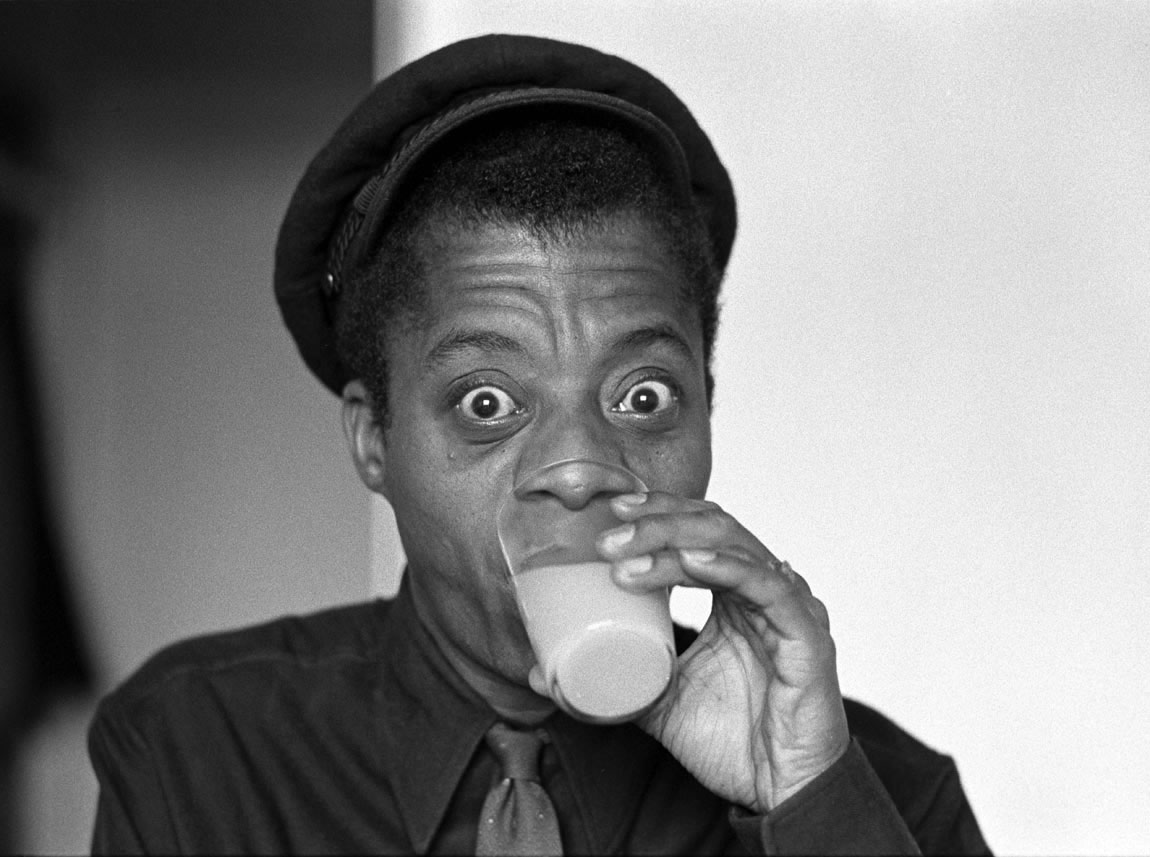
This is The Year of James Baldwin. So says a "consortium of cultural organizations" in New York City. As Baldwin's name does not come up every day in my current surround, I view my stumbling upon this celebration as affirmation that I am still 'on task' in my intellectual life, still doing something right (though it is far from apparent to me most of the time).
According to Wikipedia, his complete oeuvre reads:
- Go Tell It on the Mountain (semi-autobiographical novel; 1953)
- The Amen Corner (play; 1954)
- Notes of a Native Son (essays; 1955)
- Giovanni's Room (novel; 1956)
- Nobody Knows My Name: More Notes of a Native Son (essays; 1961)
- Another Country (novel; 1962)
- A Talk to Teachers (essay; 1963)
- The Fire Next Time (essays; 1963)
- Blues for Mister Charlie (play; 1964)
- Going to Meet the Man (stories; 1965)
- Tell Me How Long the Train's Been Gone (novel; 1968)
- No Name in the Street (essays; 1972)
- If Beale Street Could Talk (novel; 1974)
- The Devil Finds Work (essays; 1976)
- Just Above My Head (novel; 1979)
- Jimmy's Blues (poems; 1983)
- The Evidence of Things Not Seen (essays; 1985)
- The Price of the Ticket (essays; 1985)
- The Cross of Redemption: Uncollected Writings (essays; 2010)
- Nothing Personal (with Richard Avedon, photography) (1964)
- A Rap on Race (with Margaret Mead) (1971)
- One Day When I Was Lost (orig.: A. Haley; 1972)
- A Dialogue (with Nikki Giovanni) (1973)
- Little Man Little Man: A Story of Childhood (with Yoran Cazac, 1976)
- Native Sons (with Sol Stein, 2004)
At best, I've read excerpts from The Amen Corner and Nobody Knows My Name. His name comes up again and again -- in conversation, in commemorations of one kind or another on NPR or among my poet friends. Until now, I resisted falling or following but it was not because I couldn't hear him, didn't feel something stir and moan within me, especially whenever I encountered his analysis and commentary on American culture.
It was more a case of avoiding the pain of knowing, of seeing what one can't help but see because Baldwin is nothing if not plain-spoken in his critique. It always hurt a little hearing his recorded voice on the radio, talking about the Negro experience in America. It always seemed he was telling my whole life with his words, killing me softly ...
I am reading Go Tell It On the Mountain. A friend has given me access to her boyfriend's dormant library card and I have borrowed the title as an e-book. I did not know until minutes ago that it was his first published work and that it is semi-autobiographical (not that I didn't already suspect I was reading his life story).

I am letting him in at last. And it still hurts. It's hard not to take nearly everything he says personally, hard to maintain a strictly intellectual, subjective frame of mind when I read him. It is impossible to ignore the compromises and half-truths of my own life in the light of his precise, unflinching candor.
This morning I acknowledge that a transformation is underway. I am letting him in. The usual pain is assuaged by the signature gentleness and compassion that I perceive in Baldwin's writing, a tender sadness that carries and tempers his astute observations. I feel him grieving for America, for white people, for black people, for the intractability of the "race problem" that has defined interracial relationships here from the beginning.
His writing makes me aware that my half-truths and compromises have not brought me peace of mind but rather produced an uneasy resignation that has precluded true contentment and unbridled joie de vivre. I've been a lifelong host to squelched discontent. It likely underlies my lifelong "battle" with depression.
Baldwin left the country. Was he able to see his native land more clearly from a distance? Did exile make it easier to find his voice and the courage to speak?
Reading him now I feel ice breaking somewhere inside me...
Subscribe to:
Posts (Atom)